Breadcrumb

  1. Home
  2. Programs
  3. Cancer Genome Characterization Initiative

CGCI: Cancer Genome Characterization Initiative

The Cancer Genome Characterization Initiative (CGCI) uses molecular characterization to uncover distinct features of rare cancers. Current projects perform comprehensive molecular cataloging of HIV+ and other rare adult and pediatric cancers. The research community can use CGCI data to gain insights into the underlying mechanisms of these cancers and identify potential therapeutic targets.
Cancer Genome Characterization Initiative Banner. Links to Program Page

NEWS & PUBLICATIONS

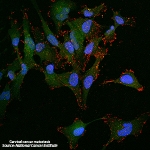
Cervical Cancer Metastasis
Analysis of Ugandan cervical carcinomas identifies human papillomavirus clade-specific epigenome and transcriptome landscapes

Cervical cancer is the most common cancer affecting sub-Saharan African women and is prevalent among HIV-positive (HIV+) individuals. No comprehensive profiling of cancer genomes, transcriptomes or epigenomes has been performed in this population thus far. We characterized 118 tumors from…

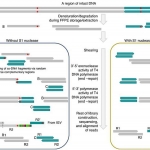
Strand split artifact reads (SSAR) mapping and diagrammatic depiction of the proposed mechanism
Sources of erroneous sequences and artifact chimeric reads in next generation sequencing of genomic DNA from formalin-fixed paraffin-embedded samples.

Tissues used in pathology laboratories are typically stored in the form of formalin-fixed, paraffin-embedded (FFPE) samples. One important consideration in repurposing FFPE material for next generation sequencing (NGS) analysis is the sequencing …

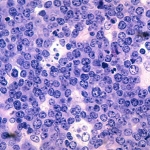
Malignant B-cell lymphocytes seen in Burkitt's lymphoma, stained with hematoxylin and eosin (H&E) stain.
Genome-wide discovery of somatic coding and non-coding mutations in pediatric endemic and sporadic Burkitt lymphoma.

Though generally curable with intensive chemotherapy in resource-rich settings, Burkitt lymphoma (BL) remains a deadly disease in older patients and in sub-Saharan Africa. Epstein-Barr virus (EBV) positivity is a feature in over 90% of cases in malaria-endemic regions and up to 30% elsewhere.…

Mutational and structural analysis of diffuse large B-cell lymphoma using whole-genome sequencing.

Diffuse large B-cell lymphoma (DLBCL) is a genetically heterogeneous cancer composed of at least 2 molecular subtypes that differ in gene expression and distribution of mutations. Recently, application of genome/exome sequencing and RNA-seq to DLBCL has revealed numerous genes that are recurrent…

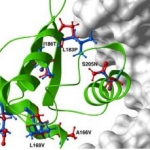
FOXO1 image
Analysis of FOXO1 mutations in diffuse large B-cell lymphoma.

Diffuse large B-cell lymphoma (DLBCL) accounts for 30% to 40% of newly diagnosed lymphomas and has an overall cure rate of approximately 60%. Previously, we observed FOXO1 mutations in non-Hodgkin lymphoma patient samples. To explore the effects of FOXO1 mutations, we…

  • 0
  • 1
  • 2
  • 3
  • 4

Projects

Burkitt Lymphoma

The goal of the Burkitt Lymphoma Genome Sequencing Project (BLGSP) is to explore potential genetic changes in patients with Burkitt lymphoma (BL) that could lead to better prevention, detection, and treatment of this rare and aggressive cancer.

HIV+ Tumor Molecular Characterization Project

The Office of Cancer Genomics (OCG), along with the Office of HIV and AIDS Malignancies (OHAM), initiated the HIV+ Tumor Molecular Characterization Project (HTMCP) to gain insight into the genetic events driving HIV-associated cancers and to determine why certain cancers, but not others, have higher incidences in HIV-positive patients.

Medulloblastoma- Complete

CGCI developed the Medulloblastoma Project to apply newly emerging genomic methods towards the discovery of novel genetic alterations in medulloblastoma (MB)This medulloblastoma study is complete; please refer to the publication.

Non-Hodgkin Lymphoma- Complete

CGCI initiated the Non-Hodgkin Lymphoma Project to elucidate the mutation spectrums of the two most abundant forms of non-Hodgkin lymphoma (NHL)Opens in a New Tab: follicular lymphoma (FL) and diffuse large B-cell lymphoma (DLBCL). This project is complete, and publications can be found here

Last Updated: