
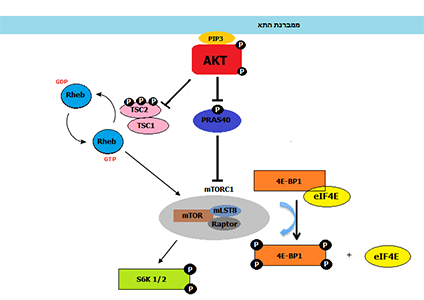
AKT Mediated Cell Growth Scheme (https://creativecommons.org/licenses/by/4.0/)
Despite the important role of the PI3K/AKT/mTOR axis in the pathogenesis of cancer, to date there have been few functional oncogenic fusions identified involving the AKT genes. A 12-year-old female with a histopathologically indeterminate epithelioid neoplasm was found to harbor a novel fusion between the LAMTOR1 and AKT1 genes. Through expanded use access, she became the first pediatric patient to be treated with the oral ATP-competitive pan-AKT inhibitor ipatasertib. Treatment resulted in dramatic tumor regression demonstrating through patient-driven discovery that the fusion resulted in activation of AKT1, was an oncogenic driver, and could be therapeutically targeted with clinical benefit. Post-clinical validation using patient-derived model systems corroborated these findings, confirmed a membrane-bound and constitutively active fusion protein, and identified potential mechanisms of resistance to single-agent treatment with ipatasertib.